
In short
Do not choose a contractor solely by the lowest price or one attractive screen. Compare relevant cases, the research process, deliverables, mobile layouts, revision terms, ownership and development support. Every important agreement should be recorded in the proposal and contract before work begins.
What you are buying when you commission website design
Website design is not a collection of static pictures. A professional result describes the structure, content priorities, user journey, visual interface and behaviour of important elements across different screen sizes. Two proposals called “website design” can therefore include very different amounts of work.
Before selecting a contractor, ask for a precise list of deliverables. This makes proposals easier to compare and prevents late surprises when a mobile version, prototype or form states turn out not to be included in the budget.
- analysis of the objectives, audience and competitors;
- page structure and important user journeys;
- wireframes or an interactive prototype;
- a visual concept and an approved UI direction;
- desktop, tablet and mobile layouts;
- components, styles and reusable interface rules;
- button, form, menu, error and loading states;
- an organised Figma file and development assets.
Freelancer, design studio or in-house designer
The contractor format affects communication, speed and accountability, but it does not guarantee quality by itself. Evaluate the actual people and process rather than relying on assumptions about freelancers or agencies.
| Format | Typical strength | Main risk | Best suited to |
|---|---|---|---|
| Freelancer | Direct communication and a compact process | Dependency on one person | A small task with clear requirements |
| Web design studio | UX, UI, management and quality control in one team | The seniority of the people actually assigned | A business site, shop or complex digital product |
| In-house designer | Continuous knowledge of one product | The cost of hiring and maintaining workload | A product that is developed continuously |
If the project does not have a separate UX specialist, copywriter or developer, ask who covers those responsibilities. A strong visual designer should not automatically be expected to conduct research, write all copy, configure analytics and make technical decisions alone.
Need to compare the right format and scope?
Describe the project and we will help define the stages, number of layouts and deliverables your team actually needs.
How to compare website design prices
The least expensive proposal may omit research, prototyping, mobile layouts or development support. The most expensive proposal is not automatically the best either. Compare the same list of pages, breakpoints, journeys and deliverables.
Budget is usually affected by the number of unique pages, UX complexity, responsive layouts, a design system, animation, user roles, testing and urgency. A separate guide explains the complete website design process and cost factors.
Compare the total cost of obtaining layouts that developers can implement without constant guesswork and expensive rework—not only the price of a single screen.
How to review a contractor’s portfolio
An attractive preview does not show whether the interface was usable, responsive or ready for implementation. Open two or three cases similar to your project and ask the contractor to walk you through the complete journey from the first screen to the target action.
- Check whether the case includes internal pages, forms and states rather than only the homepage.
- Find the mobile layouts and assess readability, navigation and interactive element sizes.
- Ask for the business objective and reasoning behind the solution, not only the visual concept.
- Open the live website and compare the implementation with the design.
- Clarify the contractor’s contribution when a large team created the case.
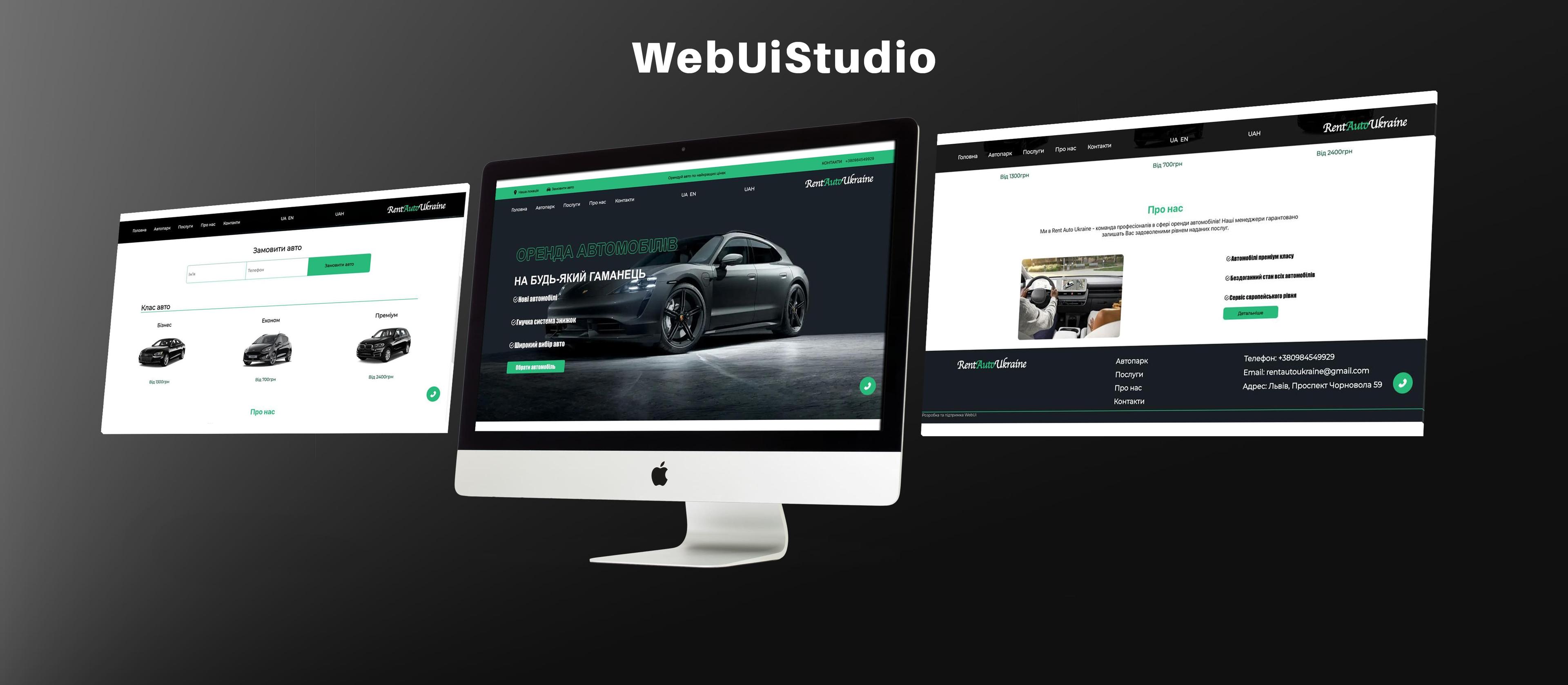
A useful case presentation shows several pages, responsive behaviour and the journey from selecting a service to making an enquiry—not a single decorative banner.
12 questions to ask before choosing a contractor
The answers reveal the real working process and allow several candidates to be assessed using the same criteria.
- Who will work on the project and which roles are involved?
- How do you research users and competitors?
- Which pages, journeys and breakpoints are included?
- Are structure, prototyping and testing included?
- How many concepts and revision rounds are provided?
- How is feedback recorded and who approves the work?
- What is treated as additional work?
- How often will the team present an interim result?
- Are components, states and a design system included?
- Who checks whether the solution can be implemented?
- Which source files and rights will be transferred?
- Does the designer support developers after handover?
The brief and specification
A contractor should not expect the client to define every spacing value in advance. Part of the work is converting a business need into clear requirements. However, final design without an agreed foundation quickly becomes an endless exchange of subjective revisions.
Before design begins, define at least:
- the website goals and primary conversions;
- the audience, needs and objections;
- the page list and important functions;
- existing brand guidelines, content and constraints;
- relevant references and why they matter;
- who provides content, reviews and approves the work;
- the acceptance criteria for every stage.
What to include in the contract
| Area | What to define |
|---|---|
| Scope | Pages, journeys, breakpoints, components and prototypes |
| Stages | Order, timeline, owners and approval points |
| Revisions | Included rounds and rules for additional changes |
| Payment | Deposit, milestone payments and pause conditions |
| Rights | Transfer of rights and third-party asset licences |
| Handover | Figma structure, graphics, documentation and access |
Also agree what happens if the client’s materials are late, the structure changes after prototype approval or the project is paused. Transparent terms protect both sides and reduce conflict.
What a reliable working process looks like
A reliable contractor presents the result in stages. The team first agrees the structure and logic, then the visual direction, key pages, responsive layouts and states. This makes it possible to correct a fundamental error before it is repeated across dozens of screens.
Feedback should be consolidated in one place. When several stakeholders send contradictory requests through different messengers, the designer spends time identifying the current version instead of solving the actual product problem.
Warning signs when selecting a contractor
A fixed price before any questions are asked
A precise estimate without understanding the structure, features and unique screens often means that important work is missing or the same template is offered to every client.
A promise to start with an attractive homepage immediately
Without a journey, structure and content, the first concept may look impressive while failing to support user and business objectives.
No mobile layouts or interface states
Developers should not have to invent menu, form, error and complex component behaviour on smaller screens.
No clear rules for files and ownership
If the transfer of Figma files, access, licences and rights is not described, ending the collaboration may be more difficult than producing the design.
Website design acceptance checklist
- all agreed pages and journeys are present;
- desktop and mobile layouts are consistent;
- buttons, forms, menus, errors and empty states are shown;
- components are named and organised in Figma;
- fonts, imagery and icons have clear licences;
- content is readable and not replaced with random filler;
- a developer has reviewed the layouts before acceptance;
- source files, access and usage rights have been delivered;
- the support process during implementation is defined;
- the final result matches the contract and prototype.
A checklist does not restrict the designer’s creativity. It separates subjective preferences from measurable readiness for development.
Frequently asked questions
Should I choose a freelancer or a web design studio?
A freelancer can be a good fit for a small, clearly defined task when you are prepared to manage the process yourself. A studio is usually better suited to projects that require research, UX, UI, responsive layouts, quality control and development support. The decision should be based on the actual team, process, accountability and contracted deliverables rather than the supplier’s label.
How should I evaluate a designer’s portfolio?
Do not assess only attractive hero screens. Review complete journeys, mobile layouts, forms, catalogues, error states, readability and the finished live websites. Ask the contractor to explain the objective, constraints and decisions behind two or three cases that are relevant to your project.
How many design concepts and revision rounds should be included?
There is no universal number. Agree in advance how many concepts, pages and revision rounds are included, who consolidates feedback and what counts as a new request. In many projects, one carefully researched direction is more effective than several superficial and unrelated concepts.
Who should own the rights to the website design?
The contract should specify the transfer of economic rights after payment, the source files that will be delivered and the licences for third-party fonts, photographs, icons and other assets. Payment alone may not describe the scope of transferred rights in sufficient detail.
What should the designer deliver at the end of the project?
A typical handover includes an organised Figma file, desktop and mobile layouts, components, styles, interactive states, a prototype of important journeys, graphic assets and guidance for developers. The exact list should be agreed before the project begins.
Can website design start without a specification?
Research and requirements discovery can begin without a finished specification, but moving into final layouts before agreeing the scope is risky. At minimum, the goals, audience, structure, features, content, integrations, page list and acceptance criteria should be defined.
How long does website design take?
Timing depends on the number of unique pages, journey complexity, content readiness and approval speed. A simple landing page may take several weeks, while a corporate website, online shop or web product requires a longer cycle of research, prototyping and validation.
What determines the cost of website design?
The budget is affected by research, the number of unique pages and breakpoints, prototyping, UI complexity, a design system, animation, the number of user journeys, testing, urgency and development support. Proposals should be compared using the same scope rather than the final figure alone.
Comments 0
There are no published comments yet. Be the first to contribute.