Challenge and constraints
A content resource must remain easy to navigate as the number of articles grows. Without a planned taxonomy, pages compete with one another and readers struggle to discover related topics.
Visit the website: nnauto-news.cz
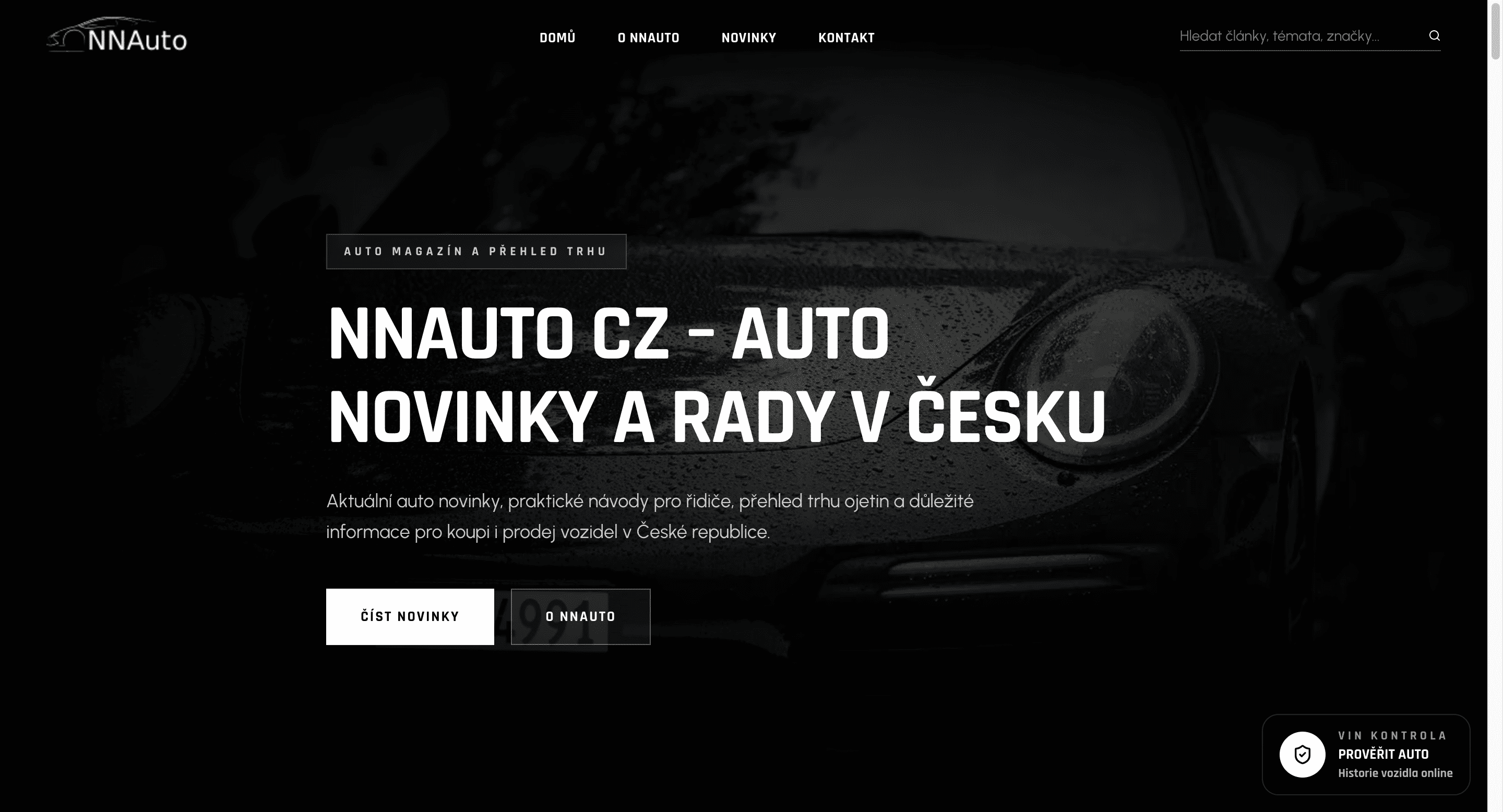
nnauto is a case study where we delivered automotive portal development for the Czech market with a strong focus on content structure, SEO readiness, user navigation, and long-term scalability. This was not simply a visual concept for a car-related website. It was a full automotive website development project designed to support search visibility, content growth, and a smoother journey for users looking for auto news, used car insights, vehicle history topics, driving advice, and practical market-oriented information. The main goal was to make portal creation work as a system: not only to look modern, but to help users enter from Google, discover related content, trust the resource, and return again.
NNAUTO NEWS is a car-focused content platform built to work as a media resource, information hub, and brand website at the same time. This is exactly why automotive portal development requires a different approach than a standard business website. A traditional company website mainly presents services, while an automotive portal must also support topic clusters, article discovery, repeat visits, internal linking, and long-term organic visibility.
In this case, the website had to do more than look professional. It had to create a clear thematic ecosystem around automotive topics, support content publication, guide readers between related materials, and establish a structure that can continue growing without losing its logic. That is why this project combined interface design, content architecture, UX thinking, and SEO-oriented planning into one system.

From the beginning, this project was treated as a long-term digital platform rather than a one-page visual showcase. The goal of creating the portal was to build a strong base for future content expansion, better discoverability, and a more trustworthy automotive brand presence within the Czech market.
Proper automotive website development for a content-based project should always connect three layers at once: user needs, search logic, and future scalability. That is the approach we followed in this case.
One of the most important parts of this project was the structure itself. Even a strong visual design is not enough without good content architecture. Every block on the website had to support either user clarity, SEO relevance, brand trust, or ideally all three at the same time.
The homepage was designed to clearly communicate the website’s purpose from the first screen. Users should immediately understand that the platform covers auto news, buying advice, vehicle history topics, market-related content, and practical driver guidance. This helps reduce friction and improves engagement from the first visit.
Instead of presenting content in a chaotic way, the structure supports clear thematic entry points. This helps readers move through the site more naturally and also gives search engines clearer signals about the main subject areas the platform covers.
For an automotive media project, articles are not secondary pages. They are often the main entry points from Google. That is why article page design matters so much: headings must be scannable, text must be readable, internal transitions must feel natural, and the layout must support long-form content without making the experience heavy.
FAQ sections, contact blocks, and the “about” page help the website feel complete and credible. They also strengthen relevance around recurring user questions and make the site more useful for both human visitors and search engines.
The site logic was also built to help readers move from one practical need to another. Someone reading about buying a used car may continue to VIN-related topics, market checks, or service-oriented advice. This kind of flow increases depth of visit and makes the portal more useful as a real information resource.
This project was not only about pages existing on the website, but about how those pages work together as a connected platform. Automotive website development here included functional blocks that support discovery, retention, clarity, and future content growth.
The structure encourages users to move beyond one single page. Articles, FAQ sections, related topics, and supporting content work together to create a more complete journey. This helps improve session depth, increases relevance across the site, and supports stronger content relationships.
Since content websites receive a large portion of visits from mobile devices, the layout was built to remain comfortable across mobile, tablet, and desktop screens. Spacing, text rhythm, large visual blocks and heading hierarchy all help keep long-form content readable and accessible.
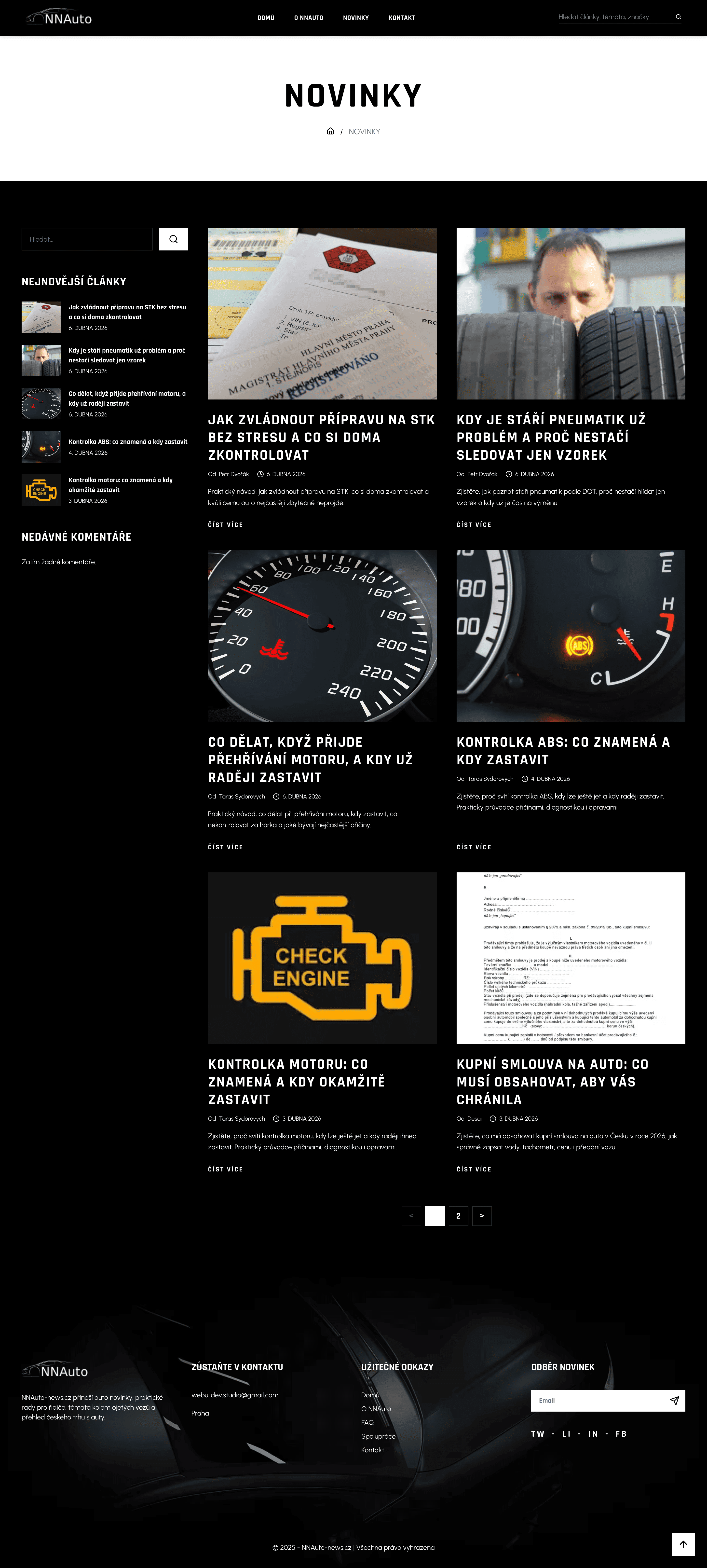
A strong portal is not built only through articles. It needs a structural SEO foundation. In this project, the logic was based on the idea that each page should have a role inside a wider content system. The homepage supports the main theme, article pages bring targeted search traffic, FAQ expands relevance, and internal linking helps users and search engines understand topical relationships.
This case page itself also reflects that logic. It includes clear headings, multiple supporting sections, detailed explanations, FAQ, lists, and natural integration of the target keywords without turning the page into keyword stuffing.
As a result, NNAUTO NEWS became more than a visually attractive site. It became a scalable automotive content platform with a clear structure and a solid foundation for future growth. That is the real value of automotive portal development done properly: it supports branding, content expansion, search visibility, and long-term strategic growth at the same time.
From a business perspective, this project shows how automotive website development can solve multiple tasks in one solution. It helps build a recognizable digital brand, creates a base for organic traffic, strengthens trust through useful content, and makes future scaling much easier because the website is already structured with growth in mind.
If you need a business website or a content-oriented automotive website built for structure, growth, and SEO visibility, this case demonstrates how design, content logic, and platform architecture can work together in one product.
Below are common questions about automotive portal creation, website logic, and the business value of this type of project.
This case shows that automotive portal development is far more than building a visually strong website. To make such a project work, the platform needs structure, content depth, navigation logic, responsiveness, SEO foundation, and a clear understanding of how users move through information. That is exactly what shaped the NNAUTO NEWS project. The result is a platform that can grow, strengthen the brand, and attract relevant traffic in a systematic way.
Content and SEO case
Project overview
NNAUTO NEWS was designed as an information platform rather than a static company website, allowing categories, articles and organic search entry points to expand over time.
A content resource must remain easy to navigate as the number of articles grows. Without a planned taxonomy, pages compete with one another and readers struggle to discover related topics.
We established the logic for categories, articles, internal discovery and trust pages. The homepage works as a content hub, while every article can become an independent search entry point.
What we delivered
Business value
Useful resources
Delivery approach
We identified the audience, primary user scenarios and the information customers need before their first enquiry.
We planned the page hierarchy and content around a real action — selection, enquiry, purchase or consultation.
We combined a custom visual direction with responsiveness, performance and manageable functionality.
We verified key scenarios and prepared a structure that can continue to develop after launch.
Questions about this case
Create a foundation for SEO growth and media development. We established the logic for categories, articles, internal discovery and trust pages. The homepage works as a content hub, while every article can become an independent search entry point.
Categories and topic clusters for automotive content; Article templates with internal linking support; FAQ and trust pages that expand topic context; Responsive navigation for mobile reading; Technical SEO foundation for continued growth
Yes. Structure, design and integrations are defined around the processes, audience and objectives of each business. This case demonstrates the approach rather than a reusable template.
Need a similar solution?
Complete the short quiz or explore other cases. To begin, it is enough to describe your business, main objective and the action customers should take.