Architecture · data · commerce
Turning a complex auto parts catalogue into one coherent store
The challenge was not an individual screen but the relationships between vehicles, parts, categories and supplier prices. We designed them as one system so the catalogue could support both practical shopping and future development.
01Full-cycle delivery, starting with the business workflow
We started with the way people buy auto parts: what they know about their vehicle, how they identify a part and when they need technical information. Those journeys informed the store structure and interface. Building from scratch let us organise the catalogue around vehicle selection and supplier data instead of adapting the business to the limitations of a ready-made theme. Our responsibility covered the complete implementation, including its technical and SEO foundations.
This is the approach we take to custom e-commerce development: define the necessary relationships and functionality before choosing how to implement them.
02Starting with the customer’s vehicle
A customer may not know a part number but can identify their vehicle. We implemented vehicle and model selection as a starting point, followed by the relevant product group and more specific filters. Direct catalogue browsing remains available alongside it. These paths support different levels of experience: one person can look up a known part, while another begins with the car. Vehicle selection narrows the results; it does not replace checking the technical specifications of the particular part being purchased.
03Connected data rather than a flat product list
Products, vehicles, models, attributes and supplier data were treated as related entities. That distinction matters in automotive commerce: a category describes the kind of part, a model provides its application context, and pricing comes from a separate source. Putting everything into a product name makes filters and catalogue expansion difficult to maintain. Our architecture separates those responsibilities while connecting them in the shopping journey. This foundation is more important than making the store resemble a conventional product showcase.
04Synchronising prices from multiple suppliers
Auto parts pricing is closely connected to supply. We implemented price synchronisation from different suppliers and linked it to the catalogue. This provides a systematic update process rather than editing each product price independently. The integration must relate incoming data to the relevant product, not simply receive a file. Supplier data handling therefore became part of the store architecture instead of a separate spreadsheet beside the website. The actual sources and exchange rules depend on the suppliers involved in the project.
05Categories and filters that narrow the decision
A broad assortment needs several levels of selection. Categories establish the product group, while filters narrow the relevant options by their attributes. We connected those tools to vehicle selection so browsing would form a coherent journey rather than require customers to explore the entire store again. Good filtering explains the available choice instead of presenting the largest possible list of controls. The useful sequence is vehicle, product group, relevant refinements and finally the individual part.
06Search by name, part number and OEM reference
Repeat purchases and professional parts research need a shorter route than browsing through categories. The store offers search by product name, part number or OEM reference. This complements vehicle selection rather than replacing it. The interface explains what information can be entered, reducing uncertainty about the expected query. Direct search and guided browsing provide different entry points into the same catalogue for customers who arrive with different levels of knowledge about the required part.
07Connecting product research to order placement
After narrowing the results, customers need to examine a particular part and proceed towards a purchase. Product detail, cart and order placement therefore continue the catalogue journey instead of behaving as unrelated screens. Product and price information need to remain understandable through that transition. Dedicated delivery, payment, warranty and returns pages address practical questions before a customer contacts the store. The website supports both identifying a part and preparing to place an order.
08SEO architecture for categories, models and products
Comprehensive SEO was included in development. We worked on page hierarchy, headings, metadata, internal navigation and the technical foundations of indexation. A category, vehicle model and individual part answer different search intentions, so the structure needs to distinguish them. Internal links connect those levels instead of leaving product pages isolated. This provides a basis for continued organic development: new products should enter an understandable system rather than expand a disconnected collection of URLs.
Ongoing SEO for an online store builds on that foundation, prioritising category opportunities, content and technical work according to demand and the condition of the catalogue.
09Useful filters without uncontrolled page duplication
Combinations of vehicles, categories and filters help shoppers, but not every result needs to become a search landing page. The SEO work considered the distinction between navigational states and pages intended for indexation. This involves URL structure, canonicalisation, metadata and internal access to relevant pages. The objective is to retain a complete selection experience for customers while providing a coherent catalogue for crawlers. Adding a title or H1 alone does not solve the architectural challenges of a large store.
10A mobile interface for multi-step parts selection
Selecting a vehicle, category and technical attributes on a phone requires a particularly clear hierarchy. We adapted the store for smaller screens while retaining access to search, catalogue navigation, filters and the cart. The objective is not simply to shrink desktop blocks but to make the current selection step understandable. Customers need to distinguish their vehicle context from product attributes and recognise the next action. Responsive design is therefore part of the parts-selection functionality, not just the appearance of the homepage.
11What the $10,000 project budget represents
The delivered project had a budget of $10,000. That covered more than a storefront design: development from scratch, product relationship architecture, vehicle selection, catalogue filters, supplier price synchronisation and comprehensive SEO. It is the historical budget of this particular implementation and its scope. A different store requires a separate estimate based on its data structure, integrations and shopping journeys. A case-study budget is useful context, not a fixed quotation for a new project.
Our guide to website development cost explains how estimates are formed and which deliverables to compare when assessing proposals.
12The outcome: one system instead of disconnected modules
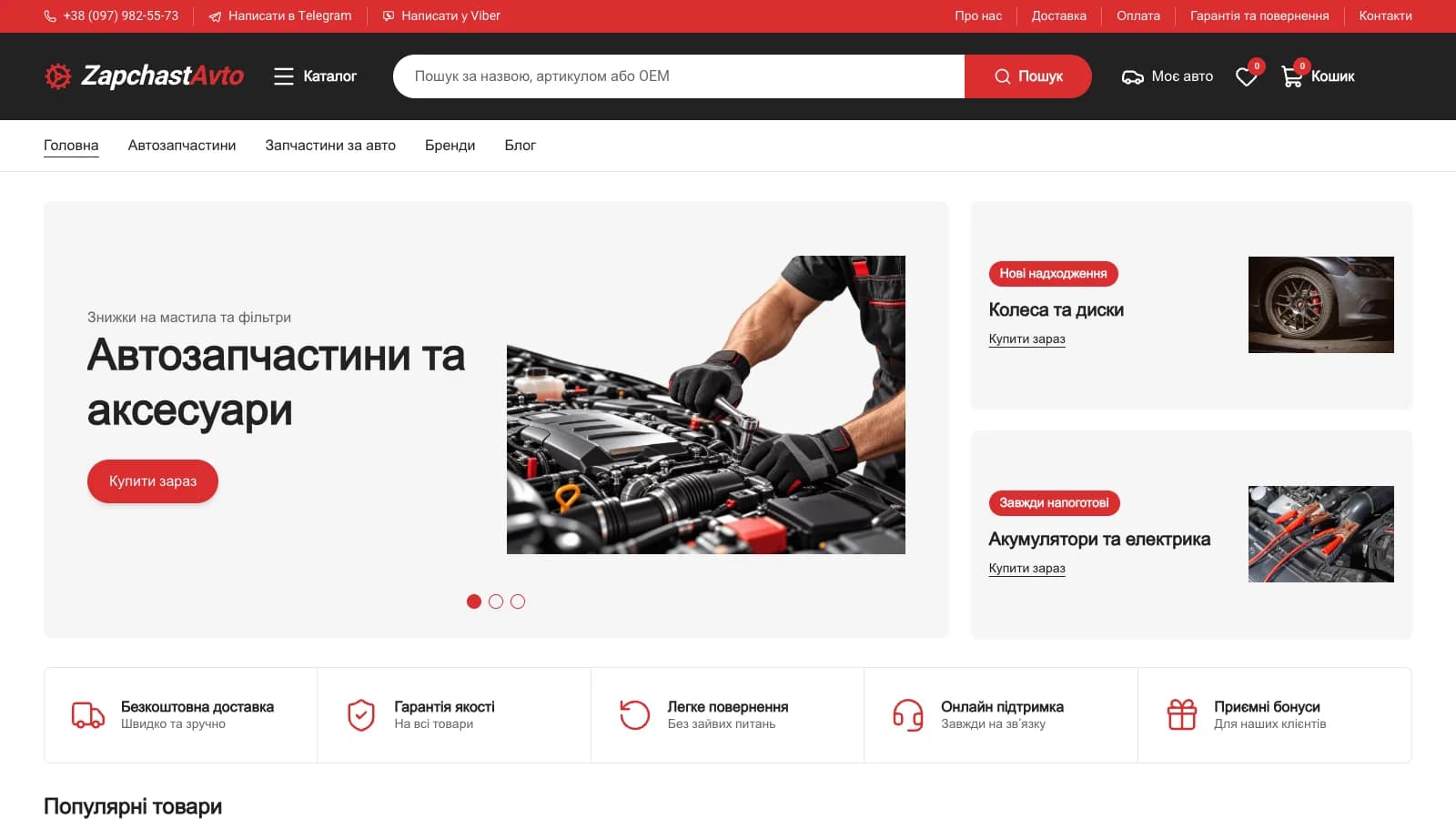
ZapchastAvto received an online store where vehicle selection, categories, search, product pages and supplier pricing share one architecture. Customers have a connected path towards a relevant part; the business has a technical foundation for managing its assortment and developing the store further. Delivered functionality is the outcome documented here. We do not substitute assumptions for sales or organic traffic results: those require separate post-launch measurements and comparable reporting periods.